
The Watermelon-Peach Smoothie pairs ripe watermelon with frozen peaches. The recipe does not give serving sizes or nutrition figures. Start with the label.
A short ingredient list is not a nutrition profile. Without recipe amounts and serving sizes, readers cannot compare sodium, saturated fat, added sugars or fiber across these breakfasts.
Fruit and yogurt keep breakfast flexible
The Watermelon-Peach Smoothie gets its fruit flavor from ripe watermelon and frozen peaches, with no added sugar listed. The Fruit & Yogurt Smoothie combines yogurt, fruit juice and frozen fruit. Juice and fruit choices affect total sugars. Check the recipe amounts; versions can have different nutrition profiles.
Yogurt also makes a handy base for toppings. Fig & Honey Yogurt combines plain yogurt with dried figs and honey. Yogurt with Blueberries & Honey uses strained, Greek-style yogurt, blueberries and honey. Honey still counts as an added sweetener. The amount matters. Compare serving size, saturated fat, added sugars and protein on the yogurt label. Values vary by product and fat level.
Homemade Plain Greek Yogurt takes more time than putting together a bowl, but the method is simple. Warm milk, stir in a little cultured yogurt and leave the mixture in a warm place until it sets. Straining makes it thicker. Use the leftover whey in smoothies or instead of buttermilk in baking. Milk choice affects the finished yogurt's nutrition, just as it does with store-bought yogurt. The recipe alone doesn't tell you its saturated-fat content.
Whole grains and simple toppings add staying power
Muesli with Raspberries combines whole grains, fiber and protein. Slow-Cooker Overnight Farro Porridge has a nutty flavor and chewy texture. Farro also provides plant-based protein, niacin, magnesium and zinc. Swapping refined grains for whole grains is a practical way to eat more whole grains. A large analysis reported in the European Heart Journal linked about four to six daily servings, roughly 60-100 grams in the cited reporting, with more favorable measures of body weight, cholesterol, blood pressure and blood sugar. That association doesn't mean one serving of porridge prevents disease. Grain weights also differ depending on whether the amount is measured cooked or dry. The USDA grains guidance recommends choosing whole grains.
For a quick savory option, cottage cheese on whole-grain bread makes a more filling toast than bread alone. The recipe gives six sweet and savory variations. Sweeter options include fruit such as blueberries and raspberries. Cottage cheese and bread can differ a lot in sodium. Check both Nutrition Facts panels, especially if you're watching your sodium intake.
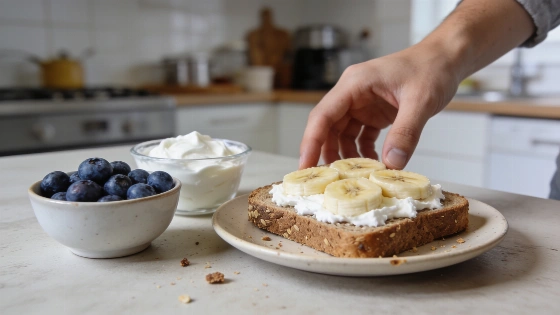
Sprouted-Grain Toast with Peanut Butter & Banana uses banana for natural sweetness. Peanut butter has unsaturated fats, but brands differ in added sugar and sodium. Check the ingredient list and Nutrition Facts panel to spot simpler versions and those with more sugar or salt. Two-Ingredient Banana Pancakes use eggs and banana, with no added sugar in the recipe. That doesn't make them sugar-free. Bananas contain naturally occurring sugars.
Put the heart-health claim in context
For a quick label check, current U.S. dietary guidance sets a daily sodium limit of 2,300 milligrams and recommends keeping saturated fat below 10% of calories. These are daily benchmarks, not a pass-or-fail test for one breakfast. The FDA's sodium guidance explains how food labels can help people compare amounts. The broader Dietary Guidelines focus on an overall eating pattern, not one "super-breakfast."
The same checks apply to nutrition shakes. Assess a product promoted for "heart health" by its serving size and listed amounts of sodium, saturated fat, added sugars, fiber and protein. A proprietary blend, a "clean" label or a high protein-to-calorie ratio doesn't tell the whole story. If the label lists a blend but not the amounts of its individual ingredients, shoppers can't tell how much of each one is in a serving.
These recipes offer flexible ways to combine fruit, yogurt, whole grains and other familiar foods. But a short ingredient list doesn't prove a health effect. Choose whole grains instead of refined grains when practical. Compare labels for the nutrients that matter to you, and consider what you eat throughout the day. Think beyond one meal. Treat these recipes as meal ideas, not a promise of a heart-health outcome.