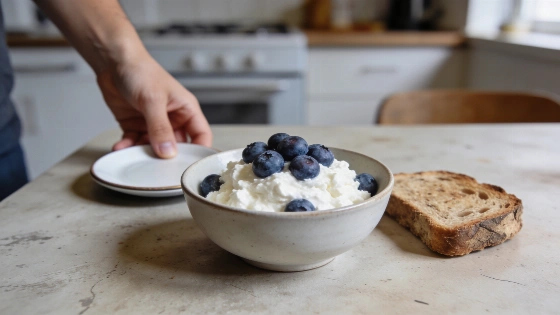
The first servings were eaten plain at breakfast, without fruit or toast. That often left the tester hungry a few hours later.
Adding fruit or toast helped carry breakfast closer to lunch. Cottage cheese contains casein, a milk protein digested more slowly than many other proteins. Nutrition expert McGowan, writing for Real Simple, says casein may contribute to satiety, though the effect varies from person to person. Fruit and whole-grain toast add fiber, so the extra staying power came from the pairing, not cottage cheese alone.
The trial came with an unexpected observation: the tester noticed shinier-looking hair. That is a personal observation, not proof that cottage cheese affected hair. Protein is needed to make keratin, a structural component of hair. Hair changes can have many causes, and a single food cannot be assumed to improve hair in people without a relevant nutrient deficiency.
During the first week, the tester started with plain low-fat cottage cheese, then tried a chive version. After finding the plain servings less filling on their own, the tester spread chive cottage cheese on sourdough and rye toast. Blueberries went into one later serving of plain cottage cheese. Pineapple and strawberries appeared in other servings, and the fruit-and-cheese combination became the favorite.
In the second week, cottage cheese moved beyond breakfast. It went on melba toast with salad. On another occasion, the tester used it as a dip for pita bread and raw vegetables. At dinner, it was added to baked potatoes. The final two breakfasts paired it with orange slices.
Laura Iu, R.D., a certified intuitive eating counselor and owner of Laura Iu Nutrition in New York City, describes cottage cheese as a source of protein and calcium. It also provides phosphorus. Its B vitamins include B12. Cottage cheese protein includes casein, which supplies amino acids. Cottage cheese and Greek yogurt are both protein-rich options. Their nutrition varies by product, and personal preference or tolerance can help guide the choice.
A half-cup serving of 2% milk-fat cottage cheese provides 90 calories and 2 grams of fat. It contains 12.1 grams of protein and 4.7 grams of carbohydrates. The same serving has 353 milligrams of sodium and 113.5 milligrams of calcium. It also contains 132 milligrams of potassium, according to figures attributed to the USDA FoodData Central. Nutrition varies by fat level and brand. Salt content differs too, so the product label is the best guide to a specific tub. People advised to limit sodium should check that number.
Calcium and protein are among the nutrients involved in supporting bone health. Daniel Wiznia, an associate professor of orthopaedics at Yale School of Medicine, has described cottage cheese as a source of both. Bone health also depends on the overall diet and vitamin D. Physical activity matters too, so cottage cheese is one possible contributor, not a stand-alone way to prevent osteoporosis. The article also cites a study suggesting that higher calcium intake may be associated with lower colorectal cancer risk. An association does not establish that cottage cheese prevents cancer.
Some cottage cheese products contain probiotics, but that is not true of every product. Check the ingredient label for probiotic cultures. The nutrition label shows sodium and added sugar. Individual needs vary, and people with specific health concerns can ask a healthcare professional whether regular cottage cheese fits their situation.
For dairy safety, check that the product is made with pasteurized milk. Follow its storage instructions and keep it refrigerated. FDA guidance explains the risks of raw milk. Product handling matters alongside the nutrition label.
Cottage cheese works as a spread or dip, and it can be used as a soft-cheese ingredient. Iu suggests spreading plain cottage cheese on toast, then adding chili crunch and a drizzle of honey. Blended until smooth, it can replace ricotta in a lasagna layer. Quiche is another suggested use. Cottage cheese can also go into wraps or pancakes. Waffles are another option.
For another example of a breakfast pairing protein with fiber, an overnight oats breakdown reports figures for protein and fiber. It also gives calcium figures, while noting that those numbers do not describe a person's full nutrition needs.