
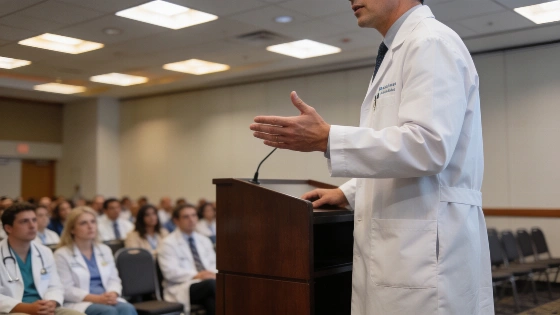
The panels after the listed keynote are set to cover lifespan health, food as medicine, performance optimization, and research on links among the gut, brain, and inflammation. That distinction matters. For clinicians and consumers, the key question is whether the discussion separates established evidence from research that is still unsettled.
OMED26 is scheduled for Oct. 22-25, 2026, in Las Vegas. The event listing puts Greger's address at 8:30 a.m. PT on Oct. 25, with the session running until noon. Independent AOA materials confirm the conference dates and that the program includes keynote sessions. They do not independently confirm Greger's appearance or those specific schedule details.
No product Supplement Facts panel or ingredient-dose comparison is part of the event information summarized here. That means the listing alone cannot establish the effectiveness of any nutrition product or ingredient discussed at the conference.
One session, several clinical angles
The event listing says the panels after the keynote will address four themes. They are lifespan health, food as medicine, performance optimization, and emerging science on the gut, brain, and inflammation. The listing gives nutrition a place in a multispecialty program, but the available independent confirmation does not verify this four-part structure.
For Shake Nutrition readers, a discussion of nutrition science is not evidence for a particular shake, protein powder, or functional drink mix. A product is easier to assess when the label lists serving size, calories, protein and fiber amounts, added sugars, and the quantities of featured active ingredients.
Greger is a physician, New York Times bestselling author, international speaker on nutrition, food safety, and public health, and a founding member and fellow of the American College of Lifestyle Medicine. He studied at Cornell University's School of Agriculture and Tufts University School of Medicine. His books include How Not to Die, The How Not to Die Cookbook, How Not to Diet, and How Not to Age. Recent NutritionFacts.org posts bearing his name indicate that he remains active as an author on nutrition topics.
Claims such as 'gut health' or 'immune support' are not proof that a finished product delivers a specific benefit. FDA guidance distinguishes structure/function claims from claims to diagnose, treat, cure, or prevent disease; shoppers still need to assess the actual ingredients, disclosed amounts, and evidence relevant to the product's intended use.
Start with the label for any product. For a powdered meal replacement or ready-to-drink shake, shoppers can compare calories, protein, fiber, and added sugars per serving. For a protein powder, they can check the protein source and serving weight. Plant-based blends may list sources such as pea, rice, or hemp. A proprietary blend that gives only a combined weight makes it harder to assess the amount of each ingredient.
Sweeteners and ingredients that affect texture also deserve a close look. Stevia, sucralose, sugar alcohols, and added fibers such as inulin or psyllium are not interchangeable. A front-label phrase like "clean energy" does not say how much of a featured ingredient is present. The NIH supplement guide offers basic consumer context for reading supplement information. Shoppers should also check the full label for allergens and serving size, rather than relying on a headline claim.
Greger's interest in lifestyle medicine is personal, too. He has described how his grandmother had end-stage heart disease at 65. After working with a lifestyle medicine physician, she lived another 31 years. That experience helps explain his motivation. It is not a substitute for clinical evidence, or a reason to assume that a particular food or product will have the same effect.
The event listing says in-person attendees may earn up to 60 AOA Category 1-A Credits or 60 AMA PRA Category 1 Credits™. It also provides registration information. The available results do not independently corroborate those credit or schedule details. Attendees should confirm them with OMED. If Greger's appearance and the described session are confirmed, the value for clinicians and consumers will depend on how well the discussion separates established findings from emerging research. It will also depend on how clearly it connects general nutrition advice to evidence people can assess.