
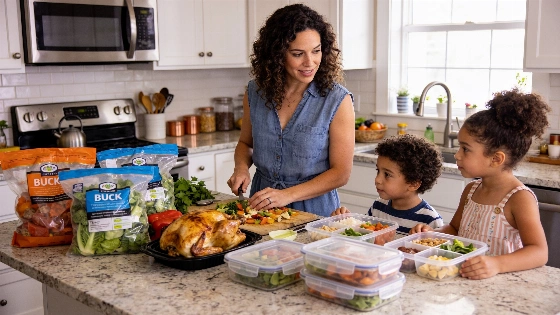
The idea that eating healthy on a budget means endless bowls of bland beans and rice doesn't hold up for everyone. One single mom with two young kids has kept her weekly grocery bill at $154-well under her $200 limit-without giving up nutrition or variety. She's tracked her spending for three months, comparing it to USDA guidelines, and consistently lands closer to the Low-Cost tier than the bare-bones Thrifty plan.
USDA benchmarks for a three-person household in 2026 set the maximum SNAP allotment at $808 per month, or about $187 per week-meaning this $154 plan comes in well below federal nutrition assistance limits.
What a $154 grocery week looks like
Her weekly meal plan is built for both variety and efficiency. Dinners follow a loose theme: soup or casserole on Sunday, rice or grain bowls on Monday, Mexican-inspired Tuesday, Italian Wednesday, breakfast-for-dinner Thursday, homemade pizza Friday, and grilling or takeout on Saturday. This isn't just for fun-it helps her use up ingredients and avoid waste.
Here's one week's dinner lineup:
- Sunday: Rotisserie chicken stir-fry (Costco chicken, leftover broccoli and peppers)
- Monday: White chicken chili (using leftover rotisserie chicken)
- Tuesday: Roasted veggie enchilada casserole (Costco tortillas, bulk cheese)
- Wednesday: Chicken parm meatballs with broccoli (ground turkey swap)
- Thursday: Broccoli and cheese quiche (frozen pie crust, leftover cheese)
- Friday: Homemade pizza and salad (Trader Joe's dough, leftover toppings)
- Saturday: Grilled pork tenderloin and veggies (Costco pork, previously frozen)
Breakfasts are simple and repeatable: whole wheat English muffins with peanut butter and banana, overnight oats, pancakes, and smoothies made from frozen fruit. Lunches are usually leftovers, with backup options like sunbutter-and-jelly sandwiches or chicken wraps using frozen tenders and salad kits. The result: everyone's fed, and little ends up in the trash.
Smart shopping tactics that actually work
She doesn't chase every coupon or drive across town for tiny discounts. Instead, she knows which stores are best for certain items-Costco for bulk proteins and snacks, Trader Joe's for affordable basics, King Soopers for fill-ins. She buys chicken, ground meat, fruit, bread, and butter in bulk, then portions and freezes them to keep per-meal costs down and reduce waste.
Claims Check: While many meal replacement shakes and protein powders market themselves as budget-friendly nutrition, shoppers should always compare the protein-to-calorie ratio, added sugar content, and serving size against USDA dietary reference intakes. Regulatory authorities such as the FDA require that all nutrition claims be substantiated by the Supplement Facts panel and prohibit unproven disease treatment claims.
Her kitchen appliances aren't just collecting dust. A slow cooker, air fryer, and food processor make it possible to cook from scratch even on busy days. She even makes her own protein bars to avoid paying extra for packaged snacks.
Small swaps with big impact
Going meatless a couple of nights a week isn't just good for nutrition-it saves money. Beans and lentils are cheap, filling, and high in fiber. Homemade pizza night replaces pricey delivery, and rotisserie chicken from Costco or Walmart stretches across several meals. Brewing coffee at home, after a one-time investment in an Aeropress and grinder, keeps her caffeine spending low.
Snacks are bought in bulk and portioned out at home, not grabbed in single-serve packs. Salad kits and tortillas help use up leftovers, so nothing sits forgotten in the fridge. The focus is always on using what's already there before buying more.
The real cost breakdown
For the week in question, her grocery total was $144.79 before taxes: $63.20 at Costco (rotisserie chicken, ground turkey, produce, snacks), $68.77 at Trader Joe's (frozen veggies, dairy, fruit, pantry staples), and $12.82 at King Soopers (fresh produce, milk, cheese). Key proteins, tortillas, and snacks were already stocked from earlier bulk runs, which kept this week's spending lower.
Some weeks cost more, especially when it's time to restock pantry staples or freezer proteins. But by tracking her spending and sticking to these habits, her three-month average stays at $154 per week, even with the occasional splurge or restock.
Why this approach works
This isn't a one-off challenge or a theoretical budget hack. It's a system that balances nutrition, convenience, and cost. By planning meals around overlapping ingredients, buying in bulk, and freezing extras, she avoids expensive last-minute shopping and food waste. Her grocery bill consistently beats USDA Low-Cost benchmarks, without giving up quality or variety.
Plenty of people claim to eat healthy on a budget, but most advice falls apart when real life gets busy. This mom's approach shows that with a clear plan, smart shopping, and some flexibility, it's possible to serve balanced, satisfying meals for less than $155 a week-even with kids and the occasional guest. The real test isn't how little you can spend, but whether your system works month after month. Hers does, and the numbers prove it.
If you're considering nutrition shakes or meal replacements as part of your budget, always check the Supplement Facts label for protein, added sugars, and serving size. The USDA's Thrifty Food Plan and updated SNAP limits are good benchmarks for what a realistic, nutritious grocery budget looks like in 2026.