At a results presentation Wednesday at Seda Abreeza, DOST-FNRI chief science research specialist Dr. Mildred Guirindola said food insecurity can mean worrying about food or experiencing hunger. The agency urged local and national authorities to make nutritious food more affordable and easier to access.
Nearly 3 in 10 people in Davao Region experienced moderate to severe food insecurity in 2025. The rate fell to 29.7% from 40.2% in 2023, below the national prevalence of 32.6%. DOST-FNRI said the improvement is no reason for complacency.
Poverty and rural residence mark higher risk
The survey covered 2,394 households, averaging four members, and 7,587 individuals. Its Davao Region assessment measured individual access to adequate resources for obtaining food for a nutritious diet. It did not assess all six dimensions in DOST-FNRI's broader definition of food security.
Moderate to severe food insecurity affected 43.7% of people in poor households, compared with 24.2% in non-poor households. The wealth grouping was based on household assets, not income. Rural prevalence was 34.5%, against 27.8% in urban areas. Households with more than five members recorded 32.2%, compared with 28.5% in smaller households.
Severe food insecurity also fell, from 3.7% in 2023 to 2.2% in 2025, below the national rate of 2.9%. It affected 4.2% of people in poor households and 1.5% in non-poor households. Rates stood at 2.3% in rural areas and 2.2% in urban areas.
Officials urge direct links between farms and households
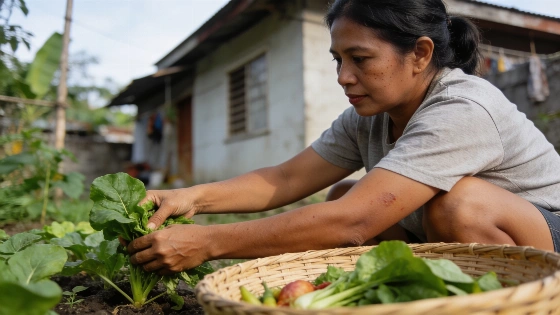
Many food-insecure households already rely on their own production. Among the 1,688 such households surveyed, 71.0% reported gathering food from a backyard garden or their own produce. For other coping measures, 64.6% sought sideline or extra work, while 64.3% borrowed money from relatives.
Guirindola called on the Department of Agriculture and local government units to connect producers in vulnerable barangays directly with households. Shorter supply chains, she said, could bring safe, nutritious food to households at affordable prices. They could also give farmers fairer prices and better returns.
DOST-FNRI urged the DA and local governments to expand the National Urban and Peri-Urban Agriculture Program across all highly urbanized cities in the region. It also called for distributing vegetable seeds, prioritizing low-income families, and supporting commercial growers alongside community growers. The agency urged full implementation of the Free Meals Program under the Sagip Saka Act. The law directs national and local agencies, including DSWD and DepEd, to procure at least 50% of their food requirements directly from local cooperatives without competitive bidding. DOH is also among the agencies covered.
The DA's broader food-security agenda recognizes hunger and food insecurity as continuing challenges. It also addresses malnutrition and calls for food systems that give everyone access to safe, affordable food that is nutritious. The department described these priorities in its World Food Day announcement.
Separately, the Department of Agriculture's SAGIP-SAKA program gives farmer and fisherfolk cooperatives a procurement channel. The Agricultural Training Institute has published an invitation for negotiated procurement under the program. That mechanism supports agricultural producers and is distinct from the Davao survey recommendations. The program is outlined in the institute's SAGIP-SAKA procurement notice.